
 This is an upcoming feature. HTML Encode is planned for general availability in version 10.1.
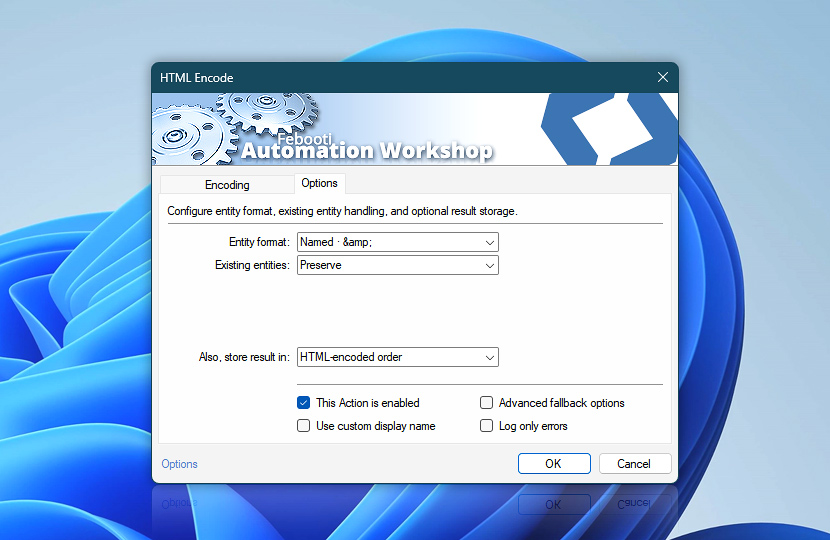
The Options tab of the HTML Encode Action allows you to choose the HTML entity format, control how existing entities are handled, and optionally store the result. These settings determine how reserved and non-ASCII characters are represented in the encoded output.
Choose named, decimal numeric, or hexadecimal numeric entities according to the requirements of the destination system. Existing valid entities can be preserved to prevent double encoding or encoded again when their literal text representation is required.
| Options | Details |
|---|---|
| Entitiy format | Specifies the format used for HTML entities in the encoded output:
All three formats represent the same characters. Choose the format required by the destination system or preferred for readability and consistency. |
| Existing entities | Controls how valid HTML entities already present in the input are handled:
|
| Also, store result in | The result of the encoding operation is already accessible via the Variable Wizard. Optionally, choose an existing variable to store the result. To create an empty variable, use the Set Variable Action. |
| This Action is enabled | An Action is executed only if it is enabled. Otherwise, it will be automatically skipped (completely ignored) from the Task flow. |
| Use custom display name | Rename this Action, to make a human-readable workflow that will help you to find, read, and make sense of the Task structure later. |
| Advanced fallback options | Manage the advanced fallback options—select which error types will lead to automatic execution of predefined workaround operations. |
| Log only errors | Do not log information and warning messages for this Action. It may be useful to keep the log file small and tidy on production systems. |
Need assistance?
If you have any questions, please do not hesitate to contact our support team.